
If your buyers are ordering through five different systems, your team is rekeying data into the back office, and nobody can tell you with any confidence what was ordered last week, then this guide is written for you.
There is a version of B2B eCommerce that works exactly as it should. Buyers log in, find what they need from an accurate and up-to-date catalogue, place an order, and the whole transaction flows automatically into your back office without anyone having to touch a keyboard twice. Purchase orders match invoices, stock adjusts without manual intervention, and your team is freed up to do work that actually requires their judgment rather than spending half the day on data entry. It is not a fantasy, and it is not something reserved for businesses with enterprise-scale IT budgets. It is just a question of having the right processes and the right integration in place.
The version most B2B suppliers are actually living with looks rather different. Orders come in by email, by phone, occasionally by fax, through three separate portals that nobody can quite remember the passwords for, and sometimes via a spreadsheet that a buyer has been using since 2014 and has no intention of abandoning.
Enterprise customers start asking about PunchOut integration and your sales team nods along while quietly hoping someone else in the business knows what that means. Reporting is always a week behind because somebody still has to pull the data together manually, and the errors that creep in through rekeying are a persistent background cost that everyone has quietly accepted as normal.
What sits between those two versions of eCommerce is not a technology gap so much as a process gap, and closing it is more achievable than most businesses assume when they first start looking at it seriously. GetConnect Hub is built specifically for this problem, and the five steps below are the framework we use to help B2B suppliers work through it.
Step 1: Audit what you actually have
The starting point is always an honest picture of where you are, and in most businesses that picture is more complicated than anyone expects once you actually draw it out. How many active suppliers are your buyers working with? How many different routes exist for placing an order, and how much does that vary by department, by site, or by buyer preference? Where in the process is data being entered more than once, and where are the errors most likely to occur? These are straightforward questions, but the answers are often surprisingly illuminating, particularly in organisations that have grown quickly or merged with other businesses along the way.
One pattern we see repeatedly, and it is especially common in organisations with multiple sites or branches, is that each location has developed its own approach to the purchasing problem entirely independently. Every site is solving the same challenge in a slightly different way, often paying separately for tools that could be consolidated, and the result is that nobody is getting the economies of scale they should be able to negotiate, nobody has visibility across the whole picture, and the process of trying to standardise anything becomes a project in itself because there are now six different starting points instead of one. If that sounds familiar, steps two through five are particularly relevant to your situation.
Step 2: Create one source of truth for your product catalogue
Almost every purchasing problem, when you trace it back far enough, has the same root cause: buyers cannot trust the information they are looking at. They are not sure whether the price on screen is current, whether this particular item is actually in stock or just listed as available, or whether the product specification has been updated since the last time they ordered. That uncertainty creates friction at every stage of the buying process, and it creates a pattern of behaviour where buyers start picking up the phone to confirm details rather than simply placing an order, which costs time on both sides and removes most of the efficiency gains that eCommerce was supposed to deliver.
A live, centralised product catalogue that is connected directly to your inventory and pricing systems resolves this at source. When your catalogue is the single source of truth, buyers always see accurate data, and that one change removes a significant proportion of the friction in most B2B purchasing relationships without requiring any complex technology to implement. For suppliers in the promotional products, workwear and uniform sectors, where product specifications, decoration options, minimum order quantities and lead times all need to be visible and accurate at the point of purchase, this is especially important, because a catalogue that lives in a spreadsheet and gets updated manually will always be a few steps behind the reality of what is actually available.
Step 3: Connect your buyers without disrupting their workflow
This is the step that most B2B suppliers underestimate, and it is often the one that proves most consequential when it comes to winning and retaining enterprise accounts. Large organisations do not want their buyers leaving their procurement system to visit a supplier website, log in to a separate account, and navigate an interface that has nothing to do with the systems they use for everything else. They are working inside SAP Ariba, Coupa, Jaggaer or a Microsoft 365 intranet, and their expectation is that approved suppliers are accessible from within that environment as a matter of course. If you cannot meet them there, you are unlikely to make it onto the shortlist regardless of how competitive your pricing is or how good your products are.
PunchOut integration is how you solve this. With a PunchOut connection in place, a buyer clicks through from their procurement platform directly into your live catalogue, browses and selects what they need, and their cart is returned to their system for approval, all within the workflow they already use every day. There is no separate portal login, no account to manage, and no step in the process that asks them to do something unfamiliar. From the buyer’s perspective it is seamless, and from your perspective you are accessible to enterprise procurement teams in exactly the way they need you to be.
GetConnect Hub provides PunchOut integration across all the major procurement platforms, including SAP Ariba, Coupa and Jaggaer, as well as Microsoft 365 environments through our partnership with Attollo. If you are being asked by enterprise buyers to set up PunchOut connectivity and are not sure where to start, that is a conversation we have fairly regularly and are well placed to help with.
Step 4: Close the loop with your back office
Everything that happens on the buyer-facing side of your eCommerce operation only delivers its full value if the back end keeps up with it, and for a lot of businesses that is where the process breaks down. An order arrives through the eCommerce channel, someone exports it or copies it across into the ERP or order management system, and in that transfer something gets missed or mis-typed or delayed. Multiply that by the volume of orders coming through on a busy day and you have a persistent operational overhead that your team has probably learned to absorb without questioning whether it needs to exist at all.
ERPBridge, part of the GetConnect product suite, handles this integration layer by creating a live, automated connection between your eCommerce platform and your back-office systems. Whether you are running Microsoft Dynamics, Promoserve, Zigaflow or another ERP, orders flow through automatically, stock adjusts, and the data your finance and operations teams need is there without anyone having to move it manually. For businesses processing a high volume of orders, or managing multiple product lines with complex pricing structures and variable stock, this step alone can reclaim a meaningful amount of operational time and bring error rates down substantially.
Step 5: Set the standard, then scale it
Once the foundations described in steps one through four are in place, something genuinely useful happens: you stop managing individual purchasing relationships reactively and start being able to think about how you want to grow them. You have a catalogue that buyers trust, enterprise connectivity through PunchOut, and orders flowing automatically into the back office. The question shifts from how do we get this to work to how do we scale what is working.
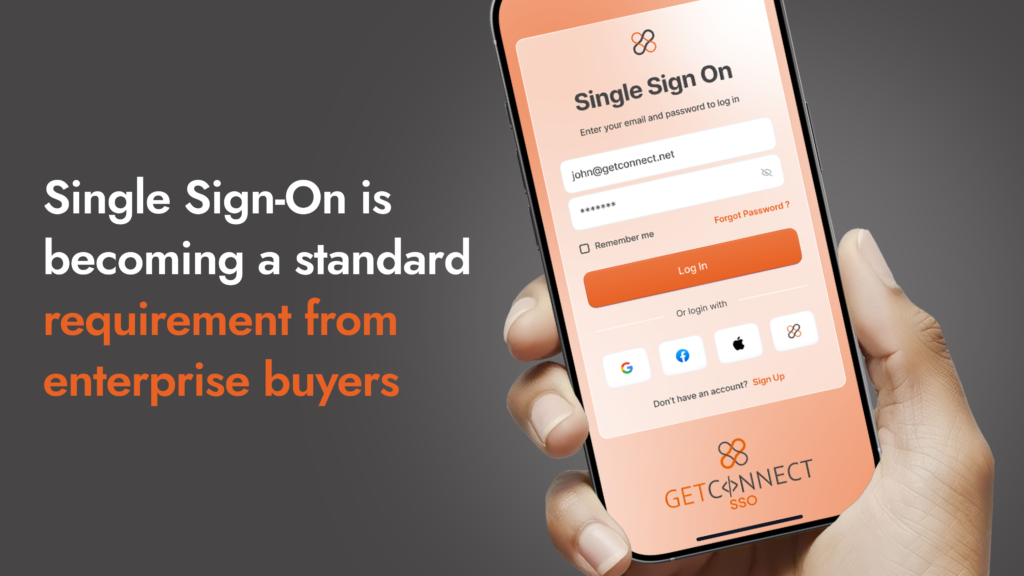
Single sign-on through GetConnect Hub allows enterprise buyers to access your catalogue using the identity provider their organisation already uses, whether that is Microsoft Entra ID, Okta or Google Workspace, which means no new passwords to manage, no separate account provisioning, and no barrier to access for buyers who would otherwise have to request credentials and wait. Branded client portals extend this further, giving each buyer or account a tailored ordering environment that reflects your brand alongside their specific product range, pricing tier and approval workflow. For suppliers managing multiple enterprise accounts simultaneously, this is the difference between delivering a genuinely premium experience at scale and trying to replicate it manually for each relationship, which works up to a point and then quietly stops being sustainable.
The outcome is a purchasing process that you have designed with intent, rather than one that has accumulated over years around the edges of your existing systems. That distinction matters more than it might seem, both for the experience your buyers have and for the operational health of your own business.
Why this matters right now
The pressure on B2B suppliers to meet enterprise buying standards has been building for several years, but it is accelerating noticeably now, and the direction of travel is clear. Procurement teams at larger organisations are consolidating their approved supplier lists and the baseline expectation increasingly is that suppliers are digital, integrated and capable of connecting to whatever procurement platform the buyer happens to be using. If you cannot offer PunchOut connectivity to a buyer running SAP Ariba, the supplier on their list who can will have a meaningful advantage over you, and that is a gap that good products and competitive pricing can only partially compensate for.
At the same time, the technology required to do all of this has become genuinely accessible for businesses that are not themselves operating at enterprise scale, which was not true five years ago. You do not need a six-figure IT project, a dedicated development resource, or eighteen months of implementation time. What you need is a clear understanding of where your current process breaks down, a product suite that is built to address those specific pain points, and an integration partner who has done these enough times to know what the complications look like before they arise.
The purchasing problem looks the same whether you are supplying a university, a national retail chain, or a network of community organisations spread across a continent: too many routes in, not enough visibility across them, and a process that is costing more than it needs to. The five steps above are how you work through it.
Ready to make your B2B eCommerce purchasing easier?
Talk to the GetConnect team about your current setup. We will give you an honest assessment of what is possible, what it involves, and how long it realistically takes to get there.