

Summary
Last month, we talked about operational resilience and why the systems holding your business together matter more than most people realise. This month, we are looking at what comes next: how to get your eCommerce portal working as hard as the rest of your team.
You built the portal. Buyers are using it. Things are good.
You have an eCommerce portal. Orders are coming through it. Your sales team has a little more breathing room because buyers are helping themselves rather than picking up the phone for every order. Someone in management has used the phrase “digital transformation” in a meeting, and nobody laughed.
B2B businesses offering eCommerce capabilities generate around 34% of revenue through digital channels, according to McKinsey. So far, so good!
Then someone asks the question you weren’t expecting.
It usually comes up in a quarterly review. Someone pulls up the portal data and asks: “What is this actually doing for us?”
And the honest answer, for a lot of businesses, is: “It takes orders. From customers who already know what they want. Who would probably have ordered anyway.”
Which is fine. But it is not the same as a portal that is actively driving growth.
Here is what tends to happen. A portal gets configured, set up for standard products and familiar order types, and then the business moves on. The portal stays exactly as it was. Meanwhile the product range grows, pricing gets more complex, and new clients arrive with requirements that don’t quite fit what you have built. The gap widens, quietly, every quarter.
Gartner research suggests B2B buyers now spend just 17% of their purchase journey talking to a supplier. The rest is independent. If your portal is not making that journey smooth, some of those buyers are going elsewhere. Forrester puts a figure on it: 74% of B2B buyers say they would switch supplier for a better digital buying experience – not better products, just a better online experience!
The fixes are less complicated than you’d expect.
Businesses that grow through their eCommerce portals are not always running more sophisticated technology. They are just using what they have more deliberately.
Buyers can find what they need without guessing.
Near-real-time stock availability, up-to-date customer-specific pricing, and simple ways to place repeat or bulk orders. These sound basic, but are easy to overlook..
The portal fits the buyer’s process, not just yours.
B2B buyers often work through their own procurement platforms and approval workflows. Punchout catalogue integration lets buyers browse and select from within their own system, with order data flowing back cleanly. For procurement teams working at scale, that can be the difference between choosing you and choosing a supplier who makes their internal process easier.
Someone actually looks at the data.
What buyers search for, where they abandon orders, which products are browsed far more than they are purchased. Businesses that record and act on this information can get considerably more from their portal, simply because you’re informed about what needs to be changed, not just guessing or reacting to that one buyer who will pick up the phone and tell you what they need.
We did all that, John! What could possibly go wrong now?
An order placed through a portal that does not connect to your ERP, warehouse system, or fulfilment platform does not just flow through. Someone re-enters it manually, cross-checks it against another system, or sends an email and waits. That step is easy to overlook at low volumes. It becomes harder to ignore when manual reconciliation is taking up three hours of someone’s morning.
Even when a business has automation, it’s easy to end up with that one little snag which causes 10% or 50% of orders to need manual changes.
Research suggests businesses with fully integrated eCommerce and back-office systems process orders up to 40% faster, with meaningfully lower error rates. One of our clients achieved 100% – doubling their capacity and improving quality of service.
In promotional merchandise and fulfilment, that gap has specific features: complex product data, tax calculation, pricing structures, and larger clients using procurement platforms that need proper integration rather than a standard checkout. These are not edge cases. They are the day-to-day reality of the sector.
This is exactly where we spend most of our time.
At GetConnect, the work we do with GetConnect Hub is largely about closing that gap: connecting eCommerce portals to the procurement systems, ERPs, and back-office platforms around them, so buyers can order the way they need to and the order lands correctly without someone manually filling in the middle.
We haven’t seen every integration challenge, but during the twenty years we’ve been working on them, we have seen a lot. Mismatched product codes, ambiguous customer references, pricing structures that vary by client, procurement platforms with their own specific requirements. GetConnect Hub is built around the reality of that environment, with those twenty years of experience encoded into the platform.
If your portal handles the straightforward stuff well but struggles when things get more complex, it is worth looking at where the gaps are. Sometimes they are smaller than expected. Either way, knowing where they are is a useful starting point.
Next month, we will be looking at the where the value is – why it’s possible to do all of this in-house, but not always the most cost-effective. We’ll look at the total cost and benefit of integrations like portal to warehouse, ERP to client systems, and how to use that info to make sharper commercial decisions.
If any of the above sounds familiar and you would like to talk through what better integration could look like for your business, we are always happy to have that conversation.
Sources
- Gartner, The B2B Buying Journey (2024)
- McKinsey & Company, The New B2B Growth Equation (2024)
- Forrester Research, The State of Digital Experience in B2B Commerce (2024)
- McKinsey Digital, B2B eCommerce and the Integration Advantage (2024)
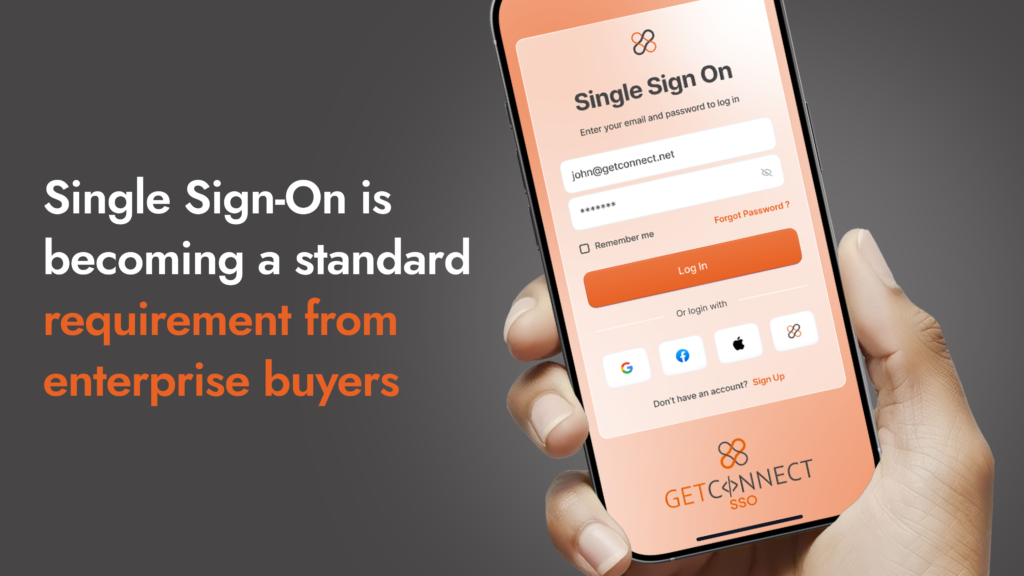
- CommerceBuild, Why ERP-Led Businesses Struggle Online (2025)______If you are unsure what a B2B portal should actually do beyond providing a login page, our guide to what B2B portals are and how they work covers the full scope of what a well-built portal delivers.A portal that requires buyers to maintain a separate login loses orders before they start single sign-on integration for B2B ecommerce removes that barrier entirely, letting enterprise buyers access your store through their existing company credentials.
If your biggest buyers are using SAP Ariba, Coupa, or Jaggaer to manage purchasing, PunchOut catalogue integration connects your portal directly to their procurement system so the order flows automatically without manual steps on either side.
A version of this article was published in Sourcing City News: Why Your Order Portal Is Costing You Money.